How Tea Tree Oil and Undecylenic Acid Support Nail Health
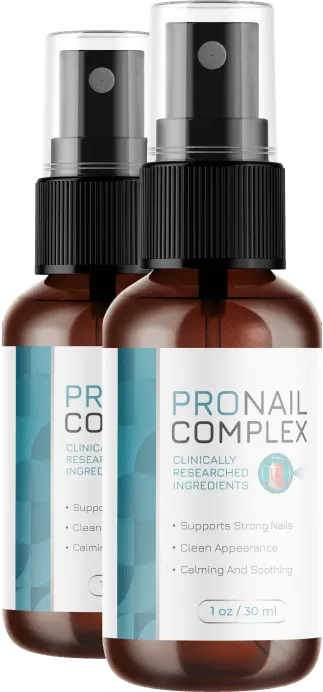
ProNail Complex combines both ingredients in a single micro-particle mist spray.
Tea tree oil: what the research shows
Tea tree oil (Melaleuca alternifolia) is one of the most-studied essential oils for antifungal and antibacterial use. Its main active compound, terpinen-4-ol, disrupts fungal cell membranes in laboratory testing, which is the basis for its long history of use in topical foot and nail care. It is generally considered appropriate for very mild, early-stage nail and skin concerns rather than severe infections.
Because undiluted tea tree oil can irritate sensitive skin, most formulas, including ProNail Complex, blend it at a lower concentration alongside carrier and soothing oils like jojoba, aloe vera and vitamin E, rather than applying it at full strength. True allergy is uncommon: an Australian patch-test series found positive reactions in 1.8 percent of people tested, and reactions were more likely with old, oxidized oil or neat 100 percent oil. The AAD's home test for any new product is to apply it to a coin-sized spot on the inner arm twice a day for 7 to 10 days and watch for redness, itching or swelling before using it more widely.
Undecylenic acid: the FDA-recognized option
Undecylenic acid has a longer regulatory track record than most "natural" nail ingredients. The FDA's OTC antifungal drug monograph recognizes it at concentrations between 10 and 25 percent for conditions like athlete's foot, meaning it is not just a folk remedy but an ingredient with an established, if modest, evidence base for fungal skin concerns. Independent product roundups researching topical nail options consistently flag undecylenic acid as the most credentialed OTC active available without a prescription.
In a wellness spray like ProNail Complex, undecylenic acid is included as one of several natural actives rather than at monograph-drug concentration, so it should be understood as a supporting ingredient in a broader formula, not a stand-alone medicated treatment.
Worth knowing: the FDA monograph specifically covers skin conditions like athlete's foot, not nail fungus (onychomycosis), because the nail plate itself is much harder for any topical ingredient to penetrate than skin. That is exactly why a daily, consistent routine matters more with nail-focused products than with skin-only treatments — the active has to keep reaching a much tougher barrier over time.
What the clinical studies on toenails actually found
Tea tree oil is one of the few natural ingredients that has been put through a controlled trial on toenail fungus, and the numbers are useful for setting expectations:
- 1994, 117 patients, 6 months. A double-blind trial compared 100 percent tea tree oil with clotrimazole 1 percent solution, each applied twice a day. The two groups came out comparable: partial or full clinical improvement in 60 percent of the tea tree group versus 61 percent for clotrimazole, and culture-confirmed cure in 18 percent versus 11 percent. The authors noted that "all current therapies have high recurrence rates" and recommended pairing a topical with filing of the nail.
- 1999, 60 patients, 16 weeks. A cream combining butenafine 2 percent with tea tree oil 5 percent cured 80 percent of patients versus none on placebo. Because butenafine is a pharmaceutical antifungal, the result cannot be credited to tea tree oil alone.
- The official reading. The National Center for Complementary and Integrative Health, part of the NIH, says only a few studies exist on tea tree oil for fungal nail infections and the evidence is not yet enough for firm conclusions.
Two newer findings explain why technique matters as much as the ingredient. A 2022 review in Dermatology Practical & Conceptual attributes the nail's resistance to "highly stable hydrogen bonds and disulfide linkages in the keratin network", and lists filing, hydration and urea among the things that help a topical get through. A 2024 laboratory study on human nail samples found that over-the-counter tolnaftate and undecylenic acid solutions penetrated the nail far less than the prescription efinaconazole. The practical takeaway for a daily spray: file the nail surface, apply to the edges and underneath the tip where the barrier is thinner, and keep going for months rather than weeks.
The supporting oils have lab data too. Eugenol, the main compound in clove oil, inhibited Trichophyton rubrum, the most common toenail fungus, in a 2013 study by interfering with the fungal cell membrane, and citral from lemongrass showed activity against dermatophytes and Candida in several in-vitro papers. None of those were human nail trials, so treat them as the reason the oils are in the formula, not as proof on their own.
Why pair them with clove, lemongrass and carrier oils?
The logic behind combining several antifungal-reputation oils, rather than relying on just one, is that each targets slightly different fungal mechanisms and concentrations. No single natural ingredient alone is a guaranteed cure, but layering several recognized actives with skin-supporting oils is a common, sensible approach in wellness nail sprays.
How to apply so the ingredients actually reach the nail
Good ingredients only help if they get to the nail. The American Academy of Dermatology's guidance for prescription topical nail treatments points to a few habits that apply just as well to a daily spray like ProNail Complex:
- Keep the nail short and filed smooth. Dermatologists file the nail surface so topical medication penetrates better. A gentle emery board on a thick nail does the same at home. Don't scrape or dig at white, crumbly areas yourself, which the AAD specifically warns against.
- Apply to clean, towel-dried feet. ProNail Complex's own directions say to spray after you shower, when the nail is softest. The AAD's tip for one prescription solution is to wait 10 minutes after feet get wet, so the compromise is simple: shower, dry your feet properly, then spray, so the mist lands on skin and nail rather than on water.
- Cover more than the top of the nail. Mist the nail, its edges, the tip where the nail lifts and the skin around it, where fungus also lives.
- Skip polish during your routine. Polish adds a layer between the spray and the nail and hides changes you want to see. The AAD suggests asking your dermatologist before wearing polish during treatment.
- Pick a fixed time. Same time every day, such as after your evening shower once feet are dry, so no day gets skipped.
Setting realistic expectations
- Toenails grow only about 1 to 1.5 millimeters per month, so visible improvement realistically takes 3 to 4 months of daily use, regardless of which ingredients are used.
- These are wellness ingredients, not prescription antifungal drugs — severe or spreading infections need a doctor's evaluation.
- Consistency matters more than any single ingredient: daily application every day, not "when I remember," is what studies on topical nail care consistently point to.
See the full ProNail Complex formula and current pricing
Check Availability & Pricing →